
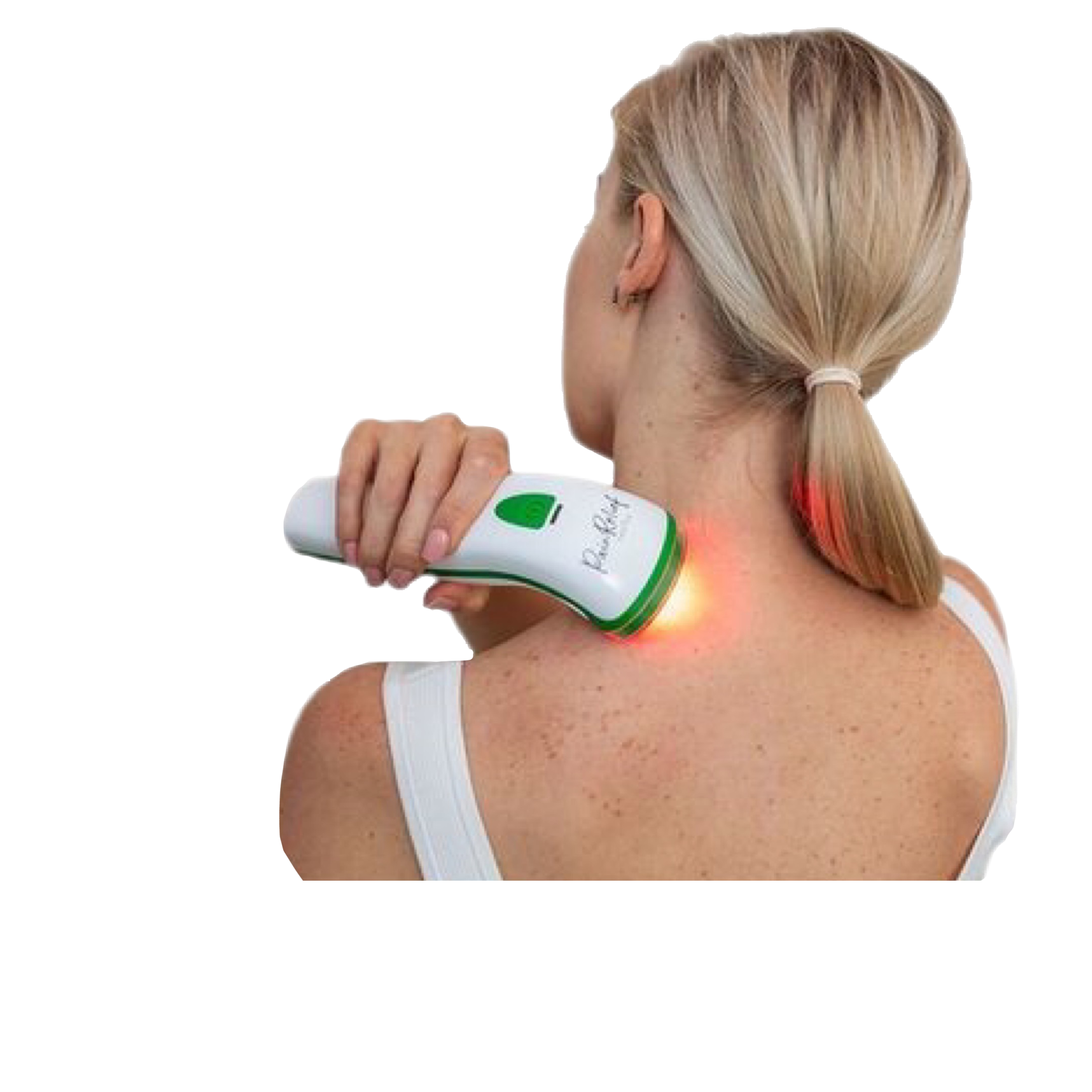
Independent research has shown that light of the correct wavelenght can provide the cells with necessarry energy to enhance and stimulate the body´s healing process. The advantages of LED light therapy also called Low Level Light Therapy (LLLT) or LED-LLLT, photobiomodulation (PBM), has been proven in clinical research. Some of the research is found below.
IS LIGHT-EMITTING DIODE PHOTOTHERAPY (LED-LLLT) REALLY EFFECTIVE?"In conclusion, based on the published data and the authors’ own experience, LED phototherapy is proving to have more and more viable applications in many fields of medicine. However, it must always be remem- bered that not any old LED will do. In order to be effective, LED phototherapy must satisfy the following 3 criteria.
- The LED system being used must have first of all, and most importantly, the correct wavelength for the target cells or chromophores. At present, the published literature strongly suggests 830 nm for all aspects of wound healing, pain, anti-inflam- matory treatment and skin rejuvenation, with a combination of 415 nm and 633 nm for light-only treatment of active inflammatory acne vulgaris. If the wavelength is incorrect, optimum absorption will not occur and as the first law of photobiology states, the Grotthus-Draper law, without absorption there can be no reaction.
- Secondly, the photon intensity, i.e., spectral irradiance or power density (W/cm2), must be adequate, or once again absorption of the photons will not be sufficient to achieve the desired result. If the intensity is too high, however, the photon energy will be transformed to excessive heat in the target tissue, and that is undesirable.
- Finally, the dose or fluence must also be adequate (J/cm2), but if the power density is too low, then prolonging the irradiation time to achieve the ideal energy density or dose will most likely not give an adequate final result, because the Bunsen-Roscoe law of reciprocity, the 2nd law of photobiology, does not hold true for low incident power densities.
Provided these three criteria are met, LED phototherapy does indeed work, and has many useful aspects in clinical practice for practitioners in many surgical spe- cialities. As an exciting extension of the monotherapy approach with LED-LLLT, and even more importantly, the combination of appropriate LED phototherapy as an adjunct to many other surgical or nonsurgical approaches where the architecture of the patient’s skin has been altered will almost certainly provide the clini- cian with even better results with less patient down- time, in a shorter healing period, and with excellent prophylaxis against obtrusive scar formation."
Mechanisms of ATP release in pain: role of pannexin and connexin channels
Mitochondrial cytochrome c oxidase is not the primary acceptor for near infrared light—it is mitochondrial bound water: the principles of low-level light therapy
Low-Level Light Therapy Potentiates NPe6-mediated Photodynamic Therapy in a Human Osteosarcoma Cell Line via Increased ATP
Below is found clicinal studies made with LED Light Therapy Device from Quantum Devices i the US, the producer of LED technology for NASA. Contact Marcus Odell, marcus.odell@pharmalight.se +4670 455 48 22 if you have any questions.
Facial Rejuvenation
Effects of Low-Level Light Therapy on Hepatic Antioxidant Defense in Acute and Chronic Diabetic Rats
Near infrared light protects cardiomyocytes from hypoxia and reoxygenation injury by a nitric oxide dependent mechanism
Pretreatment with near-infrared light via light-emitting diode provides added benefit against rotenone- and MPP+-induced neurotoxicity
Modulation of rat pituitary growth hormone by 670 nm light
NEAR-INFRARED LIGHT VIA LIGHT-EMITTING DIODE TREATMENT IS THERAPEUTIC AGAINST ROTENONE- AND 1-METHYL-4- PHENYLPYRIDINIUM ION-INDUCED NEUROTOXICITY
Photobiomodulation for the Treatment of Retinal Injury and Retinal Degenerative Diseases
PHOTOMODULATION OF CYTOCHROME OXIDASE
Embryonic Growth and Hatching Implications of Developmental 670-nm Phototherapy and Dioxin Co-exposure
Stressed Cells Survive Better with Light
Nature Inspired Hay Fever Therapy
From Microtornadoes to Facial Rejuvenation: Implication of Interfacial Water Layers
Effects of Continuous-Wave (670-nm) Red Light on Wound Healing
Biostimulatory Windows in Low-Intensity Laser Activation: Lasers, Scanners, and NASA’s Light-Emitting Diode Array System
Clinical and Experimental Applications of NIR-LED Photobiomodulation
DARPA Soldier Self Care: Rapid Healing of Laser Eye Injuries with Light Emitting Diode Technology
Effect of NASA Light-Emitting Diode Irradiation on Molecular Changes for Wound Healing in Diabetic Mice
Effects of 670-nm Phototherapy on Development
Evaluation of photodynamic therapy near functional brain tissue in patients with recurrent brain tumors
Innate immunity for biodefense: A strategy whose time has come
Light emitting diode treatment reverses the effect of TTX on cytochrome oxidase in neurons
Light Emitting Diodes as a Light Source for Intraoperative Photodynamic Therapy
Medical Applications of Space Light-Emitting Diode Technology - Space Station and Beyond
Mitochondrial signal transduction in accelerated wound and retinal healing by near-infrared light therapy
NASA Light Emitting Diode Medical Applications From Deep Space to Deep Sea
The NASA Light-Emitting Diode Medical Program - Progress in Space Flight and Terrestrial Applications
NASA Light-Emitting Diodes for the Prevention of Oral Mucositis in Pediatric Bone Marrow Transplant Patients
Photobiomodulation Directly Benefits Primary Neurons Functionally Inactivated by Toxins
PHOTOBIOMODULATION PARTIALLY RESCUES VISUAL CORTICAL NEURONS FROM CYANIDE-INDUCED APOPTOSIS
A Preliminary Investigation into Light-Modulated Replication of Nanobacteria and Heart Disease
Therapeutic photobiomodulation for methanol-induced retinal toxicity